
Manganese in Water: Filtration and Treatment Solutions
Black stains around your fixtures, dark particles in the sink, or metallic-tasting water could indicate manganese. This is a naturally occurring metal that can enter both private wells and municipal water supplies. Higher concentrations of manganese may affect your water’s appearance, taste, and suitability for drinking.
At Besco Water Treatment, we help Michigan homeowners identify manganese and select treatment based on their actual water chemistry. Our manganese water filtration solutions can address manganese problems throughout your home while also accounting for other conditions like iron, hardness, sulfur, and pH issues.
If you’d like to learn whether you have manganese in your water, schedule a water test by calling us or reaching out online. We’ll explain your results and recommend solutions accordingly.
What Is Manganese, and How Does It Get Into Water?
Manganese is a naturally occurring metal found in soil and rock. As water moves through soil and rock, manganese can dissolve into groundwater, lakes, and rivers. These sources may supply private wells or municipal water systems. Industrial activity can also release manganese into the environment.
Small amounts of manganese are an essential part of the human diet. However, too much manganese in drinking water can lead to several issues (which we go into more detail on below). The form and concentration of manganese in your home’s water, as well as the rest of your water chemistry, will determine what manganese removal method we’ll recommend.
Can Manganese Be Found in City and Well Water?
Yes. Manganese can be present in water from private wells and public systems.
Private wells draw directly from groundwater, and their owners are responsible for testing and treatment. Manganese concentrations can differ considerably between neighboring wells because of variations in depth, geology, and groundwater conditions.
Public utilities treat and monitor their water, but municipal water can still contain manganese. City-water customers can review their utility’s annual water-quality report, ask the supplier about manganese testing, or have the water at their tap tested if they notice staining, discoloration, or dark sediment.
Is Manganese in Drinking Water Harmful?
The answer to this question depends on how much manganese your water contains. The U.S. Environmental Protection Agency recommends a secondary level of 0.05 milligrams per liter to help manage noticeable effects such as dark color, staining, and metallic or bitter taste.
According to the Michigan Department of Health and Human Services, drinking water above 0.3 milligrams per liter may increase the risk of effects on the nervous system. Infants may be especially vulnerable because their bodies process manganese differently and infant formula already contains manganese.
MDHHS recommends taking action when a test result exceeds 0.3 milligrams per liter. For babies under one year old, the agency recommends using appropriately filtered or bottled water for food and powdered formula when household water exceeds that level.
Just because your water is stained a dark color does not mean it’s unhealthy. You’ll need a water test to determine whether there are harmful levels of manganese in your water.
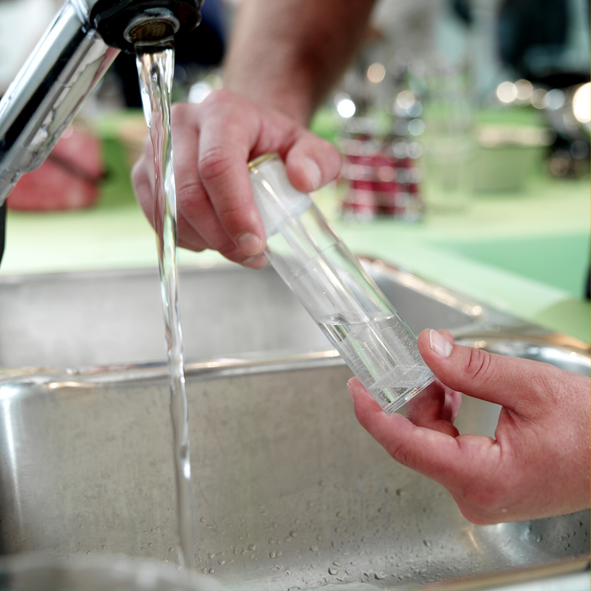
Possible signs of manganese include:
-
 Gray, brown, or black stains on sinks, toilets, tubs, and fixtures
 -
Dark spots or discoloration on laundry
-
Black particles or sediment in water
-
Water that becomes darker after sitting
-
A bitter or metallic taste
-
Dark buildup inside pipes, appliances, or toilet tanks
How to Remove Manganese From Water
Manganese can be filtered out of water, but there is no universal filter that works for every concentration and water source. Effective treatment depends on whether the manganese is dissolved or already present as particles, along with the home’s water chemistry and daily demand.
Does a Water Softener Remove Manganese?
Some ion-exchange water softeners can reduce low levels of dissolved manganese when the water conditions fall within the equipment manufacturer’s operating limits. A softener may be especially practical when the home also has hard water.
A conventional softener may not perform reliably when manganese levels are higher, the manganese has already oxidized into particles, or the water contains significant iron or sediment. Manganese can also foul the resin and reduce performance if the equipment is not properly selected and maintained.
When a softener is used for manganese reduction, correct sizing, settings, regeneration, and maintenance are essential. Besco supplies professional-grade water softener salt and can help keep the equipment operating correctly.
Whole-Home Manganese Water Filtration
When a softener is not enough to remove manganese on its own, Besco may recommend a whole-home oxidation and filtration system. Oxidation changes dissolved manganese into solid particles, and the filtration media captures those particles before the water travels through the house.
Besco’s Smart Water Plus Extractor is designed to address manganese along with iron and sulfur through oxidation and multi-layer filtration. The system is available in different sizes so it can be matched to household demand and the conditions found during testing.
Explore Besco’s whole-home water filtration systems to learn more about customized treatment. Homes with private wells may also require pretreatment or multiple stages when manganese appears with hardness, iron, sulfur, or sediment.
A basic sediment or carbon filter should not be assumed to remove dissolved manganese. Sediment filtration may capture manganese that has already formed particles, but it does not necessarily address the dissolved metal entering the filter.
What Is the Best Way to Remove Manganese From Well Water?
The best way to remove manganese from well water is to test the water and design treatment around the complete results. When designing a system to remove manganese from private wells, Besco considers:
- The manganese concentration and form
- Iron, hardness, sulfur, and sediment levels
- The water’s pH
- Household water use and peak flow
- Available space and plumbing
- Required maintenance and backwashing
Low dissolved manganese may be managed by a properly selected softener under suitable conditions. Higher concentrations or more complicated water may require oxidation, specialized filtration, or a multi-stage system. After installation, treated water should be tested to confirm that manganese has been reduced to the intended level.
Why Choose Besco for Manganese Water Filtration?
Besco does not recommend the same filter for every dark stain or metallic taste. We begin by understanding the home’s water source, test results, household demand, and other water problems before selecting equipment.
Our team provides professional system design, installation, maintenance, repair, and replacement. With more than 60 years of Michigan water-treatment experience and Water Quality Association-certified staff, Besco can support your system long after installation.
You can also explore our guide to common water problems to learn how manganese differs from iron, hardness, sulfur, and other concerns found in Michigan water.

Manganese in Water FAQs
-
Can you filter manganese out of water?
Yes, manganese can be reduced with a properly built water treatment system. Depending on the concentration and water chemistry, the solution may involve a water softener, oxidation and filtration, or multiple treatment stages.
-
Does boiling water remove manganese?
No, boiling water does not remove manganese. As water evaporates, the manganese remains and may become more concentrated.
-
Can reverse osmosis remove manganese?
Some reverse-osmosis systems may reduce manganese at a drinking-water faucet, but they are not automatically certified specifically for manganese reduction. Verify the manufacturer’s performance claims and test the treated water. Whole-home filtration may still be necessary when manganese causes staining throughout the house.
-
Are manganese and iron the same water problem?
No. They are separate metals, although both can occur in the same water and cause staining or a metallic taste. Iron commonly produces red or orange stains, while manganese more often creates gray, brown, or black staining. Testing is necessary because color alone cannot identify the cause.
Schedule Manganese Water Testing and Treatment
Black stains and dark sediment should not become another cleaning chore you learn to live with. Besco can help determine whether manganese is causing the problem and recommend treatment suited to your water.
Contact Besco Water Treatment today to discuss manganese testing, filtration, or service for an existing water-treatment system.